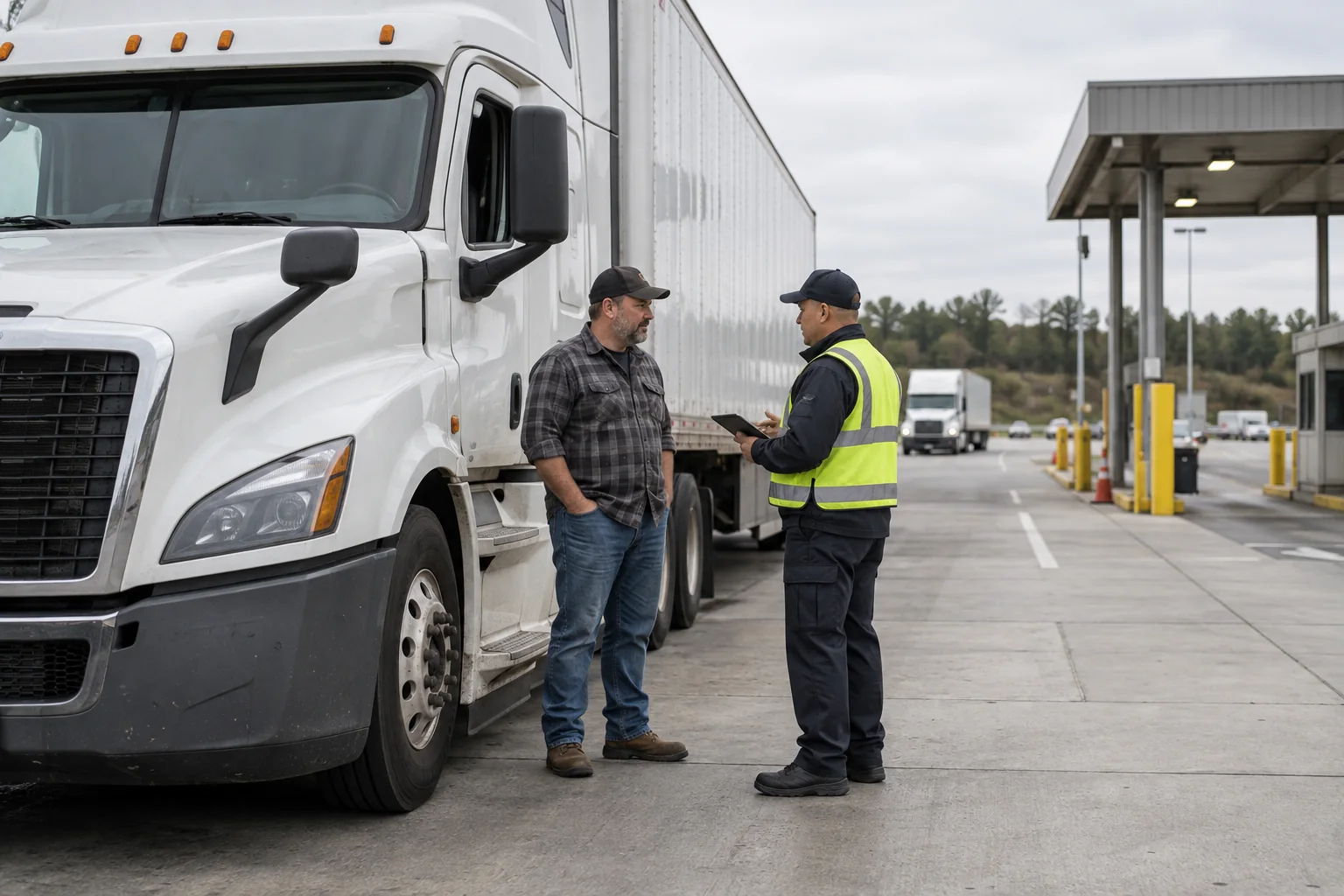
A trucking rule can change in a headline long before it changes a driver's workday. In 2026, three federal rule changes have taken effect that are worth understanding: a narrower path to certain non-domiciled commercial driver's licenses, the end of one CDL self-reporting requirement, and the removal of the requirement to keep an electronic logging device user manual in the truck. A separate English-language proposal has attracted attention, but it is not a final rule.
These changes do not apply to every driver in the same way. Some concern only applicants for a particular type of CDL; others simplify paperwork without removing the underlying safety obligations. Here is what is in force as of September 28, 2026, what remains proposed, and what drivers can do before their next renewal or inspection.
Non-domiciled CDL eligibility narrowed on March 16
The Federal Motor Carrier Safety Administration's final rule on non-domiciled CDLs took effect on March 16, 2026. It focuses on people whose domicile is outside the United States and who seek a non-domiciled commercial learner's permit or CDL from a state. Under the rule, a foreign-domiciled applicant must have an eligible, employment-based nonimmigrant status: H-2A, H-2B, or E-2. The state licensing agency must verify that status through the federal immigration verification system before issuing the credential.
The rule also limits the credential's validity to the shorter of the authorized stay or one year. It does not rewrite the ordinary CDL path for U.S. citizens and lawful permanent residents. That distinction matters because a broad claim that “all truckers need a new license” would be wrong. Existing non-domiciled credentials are not automatically canceled in a single nationwide sweep, but states must review affected credentials under the rule. A driver who holds one should check directly with the issuing state rather than assume that the printed expiration date tells the entire story.
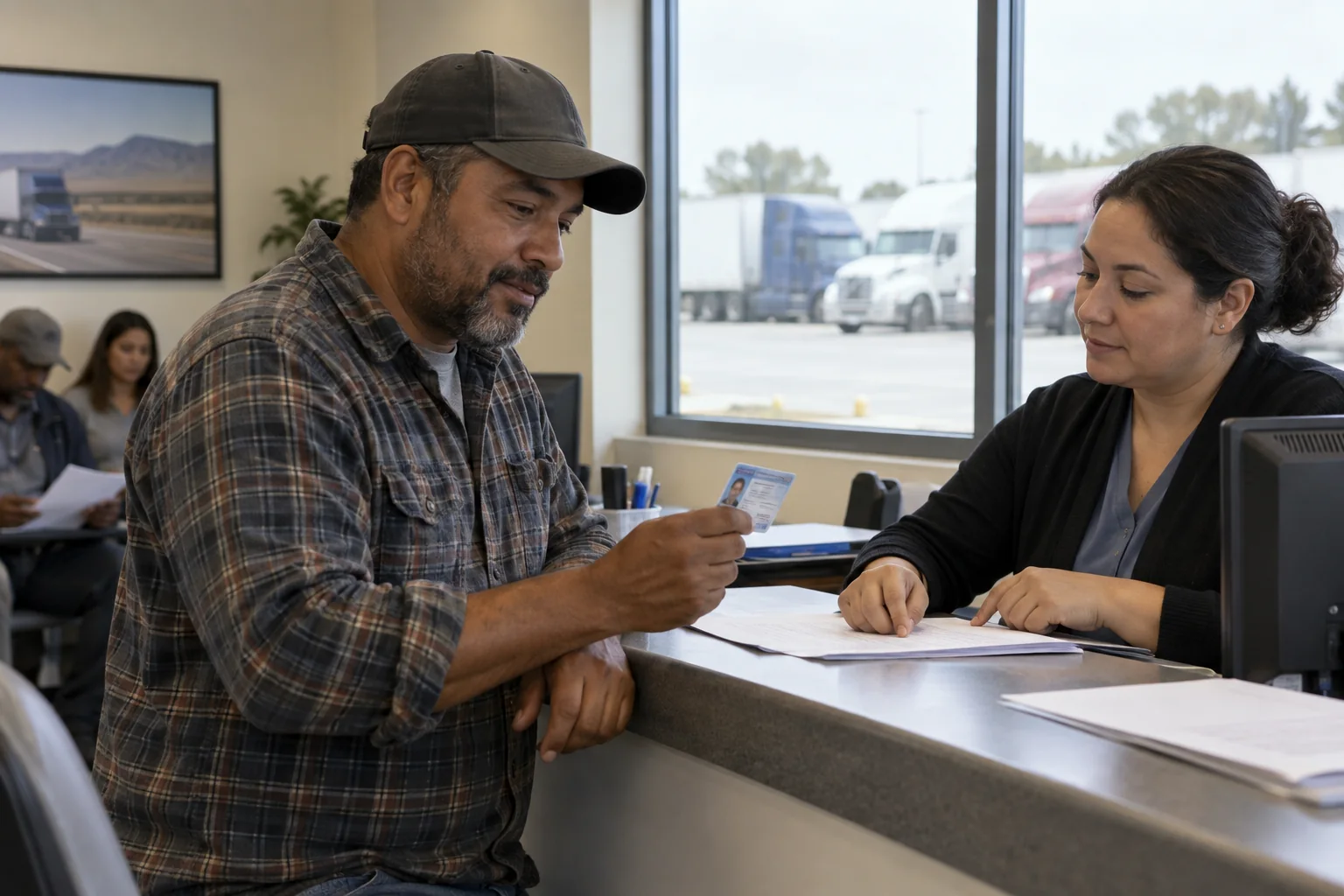
For applicants, the practical step is simple: gather current immigration and identity documents before a licensing appointment, and ask the state agency which proofs it requires. For carriers, it is sensible to confirm that onboarding staff understand the distinction between a standard CDL and a non-domiciled one. The FMCSA's official FAQ explains the affected categories and the state's verification process.
One CDL self-reporting requirement ended on July 22
Another final rule, effective July 22, 2026, removed the federal requirement for CDL holders to report certain motor vehicle violations to their state driver licensing agency themselves. The reason is administrative: states now exchange the relevant conviction information electronically. The federal rule removes a duplicate notice that drivers had previously been expected to send to their state of domicile.
This is a narrow change. A citation or conviction does not disappear because the driver no longer mails a report to the state. The rule does not cancel a carrier's reporting policies, nor does it erase other federal or state obligations that may apply to a driver or employer. If a driver is uncertain about an employer notice or a state-specific process, the safest approach is to check the current policy and retain records of the event. The published final rule identifies the specific federal requirement that was removed.
The ELD manual no longer has to ride in the cab
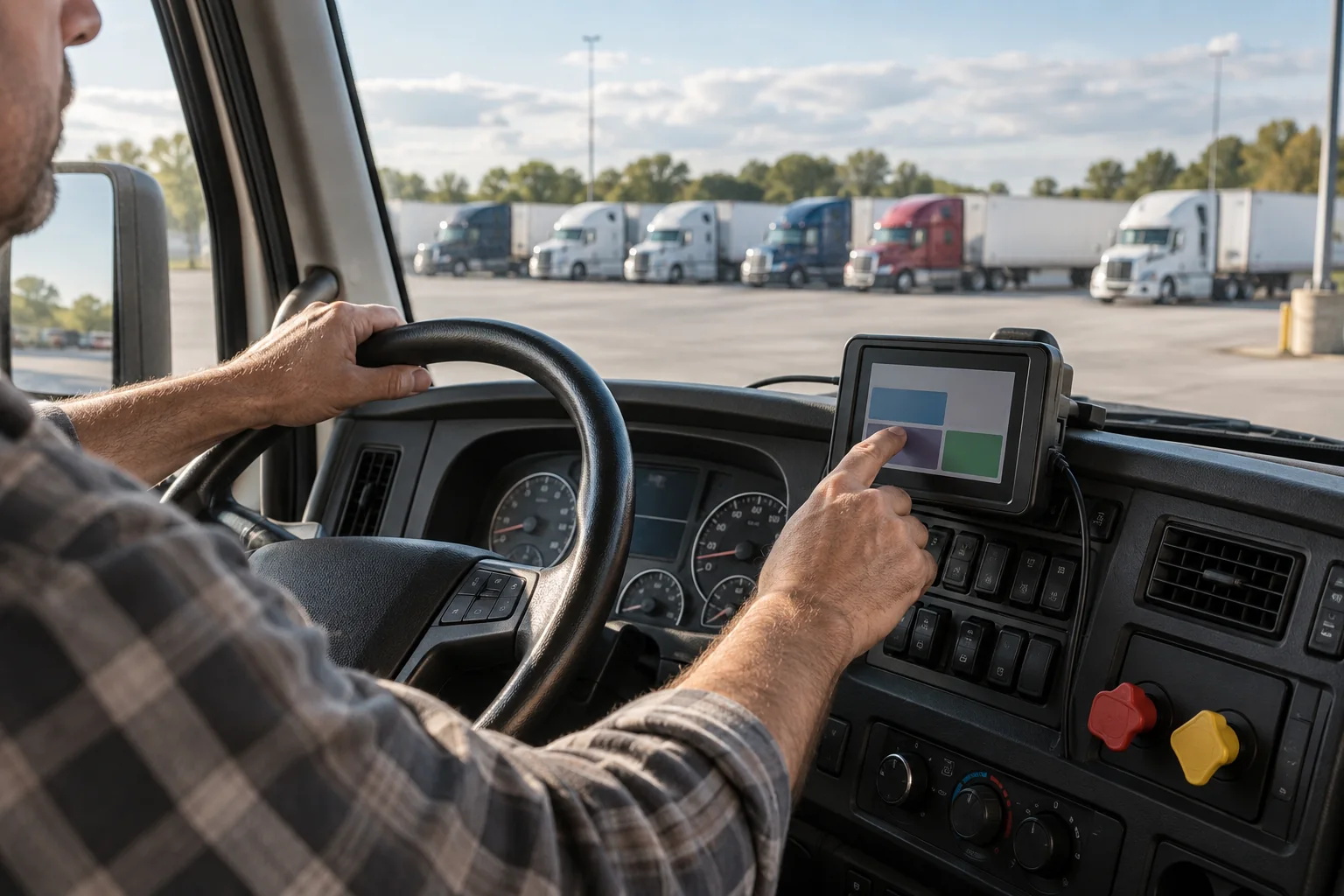
Also effective July 22, 2026, FMCSA rescinded the requirement to keep an electronic logging device operator's manual in the commercial motor vehicle. That is a paperwork change, not a repeal of the ELD system. Drivers who are subject to hours-of-service and ELD rules still need to use a compliant device, keep accurate records of duty status, and be able to present or transfer the required information during an inspection.
A carrier may still choose to make instructions readily available so a driver can navigate the device or resolve a problem. The point of the new rule is that the operator's manual itself is no longer a federally required item to carry in the vehicle. Do not confuse the manual with other ELD obligations. If a device malfunctions, the applicable recordkeeping and reporting procedures still matter. The final rule in the Federal Register describes the removed requirement.
English proficiency: current requirement, proposed new rule
English-language requirements are easy to misread because two different things are being discussed at once. Federal regulations already require a commercial motor vehicle driver to be able to read and speak English sufficiently to converse with the public, understand highway signs and signals, respond to official inquiries, and complete required records. FMCSA also issued updated roadside enforcement guidance in April 2026 concerning that existing standard.
On August 10, 2026, the agency published a proposed rule addressing English-language proficiency and out-of-service criteria. A proposal is not the same as a final regulation with an effective date. As of this article's publication, drivers should treat the existing qualification rule and current enforcement guidance as operative, while following the proposal for any later final action. The Federal Register proposal and FMCSA enforcement guidance are the primary sources to review.
A useful compliance check for the next trip
Before heading out, drivers and dispatch teams can make a short, targeted check. If a driver holds a non-domiciled CDL, confirm its status and renewal requirements with the issuing state. If a traffic violation occurs, keep the paperwork and verify which employer or state notices still apply. If the cab no longer carries an ELD manual, make sure the driver can still use the device and produce records at roadside. For English proficiency, follow the current regulation and guidance, and do not treat a proposed rule as though it has already taken effect.
Regulations can change after publication, and states may have additional requirements. Checking the agency source and the issuing state is more reliable than acting on a headline alone.
This article is a general federal overview as of September 28, 2026. It is not legal advice or a substitute for current FMCSA guidance, state licensing instructions, or your carrier's compliance policy.